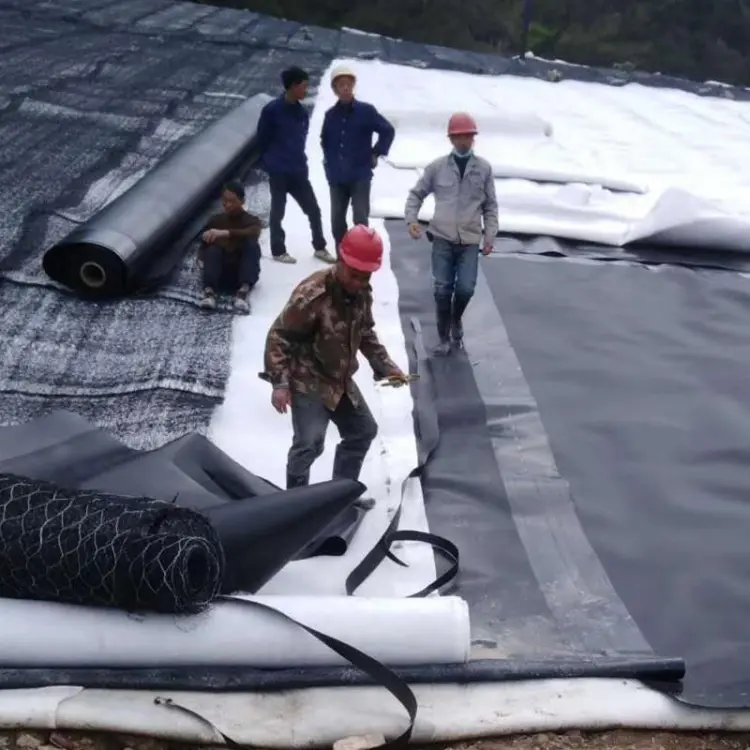
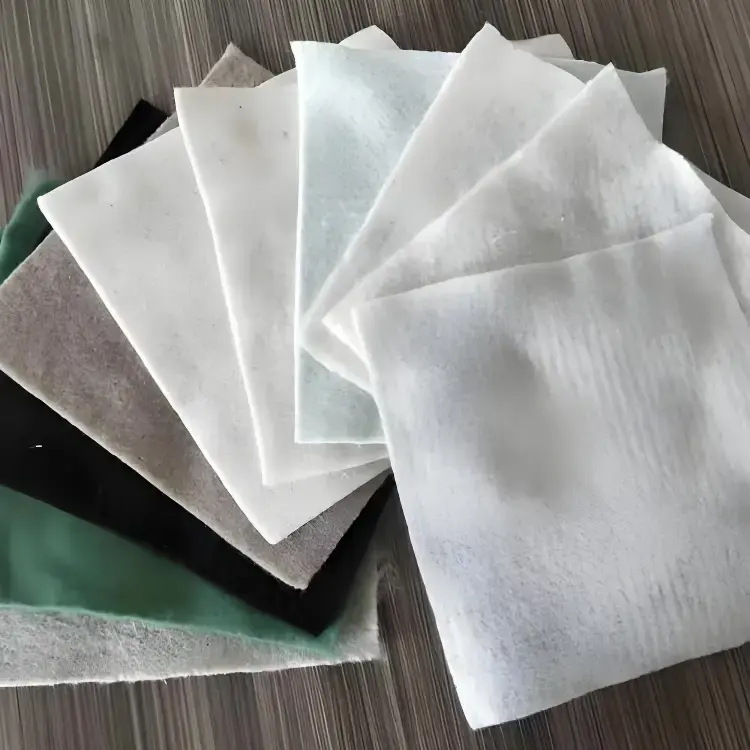
In road engineering, cracks and potholes critically compromise pavement longevity and safety. Geotextile road fabrics have emerged as high-performance reinforcements under 2025 technical standards.
I. Crack Prevention Strategies
A. Reflective Crack Mechanism
Reflective cracks propagate from base layers to asphalt surfaces due to:
- Thermal stress: Differential expansion coefficients between layers
- Dynamic loading: Stress concentration at base fractures
- Subgrade defects: Uneven settlement or material fatigue
B. Geotextile Intervention
- Barrier effect: 0.3-1.2mm nonwoven fabrics block crack paths
- Stress redistribution: Polypropylene meshes (≥50% elongation) absorb tension
- Hydrophobic protection: <5% porosity at ≥100g/m² density prevents water ingress
C. Construction Protocol
- Base preparation:
- Crack sealing with polymer-modified asphalt (depth ≥3cm)
- Surface tolerance ≤5mm per 3m straightedge
- Geotextile installation:
- Overlaps: 15cm longitudinal / 25cm transverse
- U-nail fixation (15cm length, 80cm staggered spacing)
- Asphalt placement:
- Tack coat: 0.6–1.2kg/m² emulsified asphalt
- Mix temperatures: ≥150°C (AC), ≥160°C (SMA)
 II. Pothole Mitigation
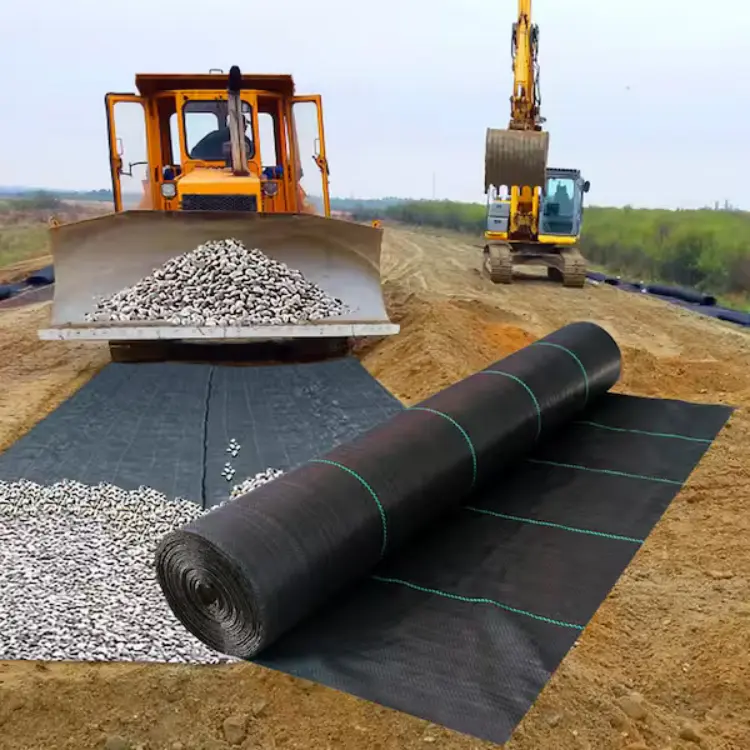 II. Pothole Mitigation
A. Failure Triggers
- Water erosion: Subgrade softening from infiltration
- Crack propagation: Asphalt delamination at stress points
- Construction flaws: Material/process deviations
B. Geotextile Functions
- Waterproofing: Impermeable membrane action
- Load distribution: Reduces localized stress by ≥40%
- Interface separation: Prevents material intermixing
C. Critical Procedures
Reuse Section I.C protocols with identical parameters
III. Material Selection
| Type | Application | Key Specifications |
|---|---|---|
| PP nonwoven | Standard roads | Tensile ≥12kN/m |
| PET woven | Heavy-duty corridors | Burst strength ≥2.5kN |
| Composite | Freeze-thaw zones | Thickness ≥1.0mm |
Technical compliance:
- Permeability: 10⁻³–10⁻² cm/s (ASTM D4491)
- CBR puncture: ≥2.0kN (JTG/T D32-2012)
IV. Quality Control
- Storage: UV exposure ≤100h; stack height <5 rolls
- Environment: Ambient >5°C, humidity <85%, subgrade MC ≤5%
- Testing: 3 samples/5000m²; seam peel ≥0.1kN/m
V. Performance Metrics
Optimized 200g/m² PP geotextile road fabrics extend service life by 40%, reducing maintenance frequency and enhancing ride quality.
VI. Conclusion
Geotextiles deliver proven solutions for sustainable infrastructure. When integrated via science-driven design and precision construction, they elevate pavement resilience to 2025 performance benchmarks.